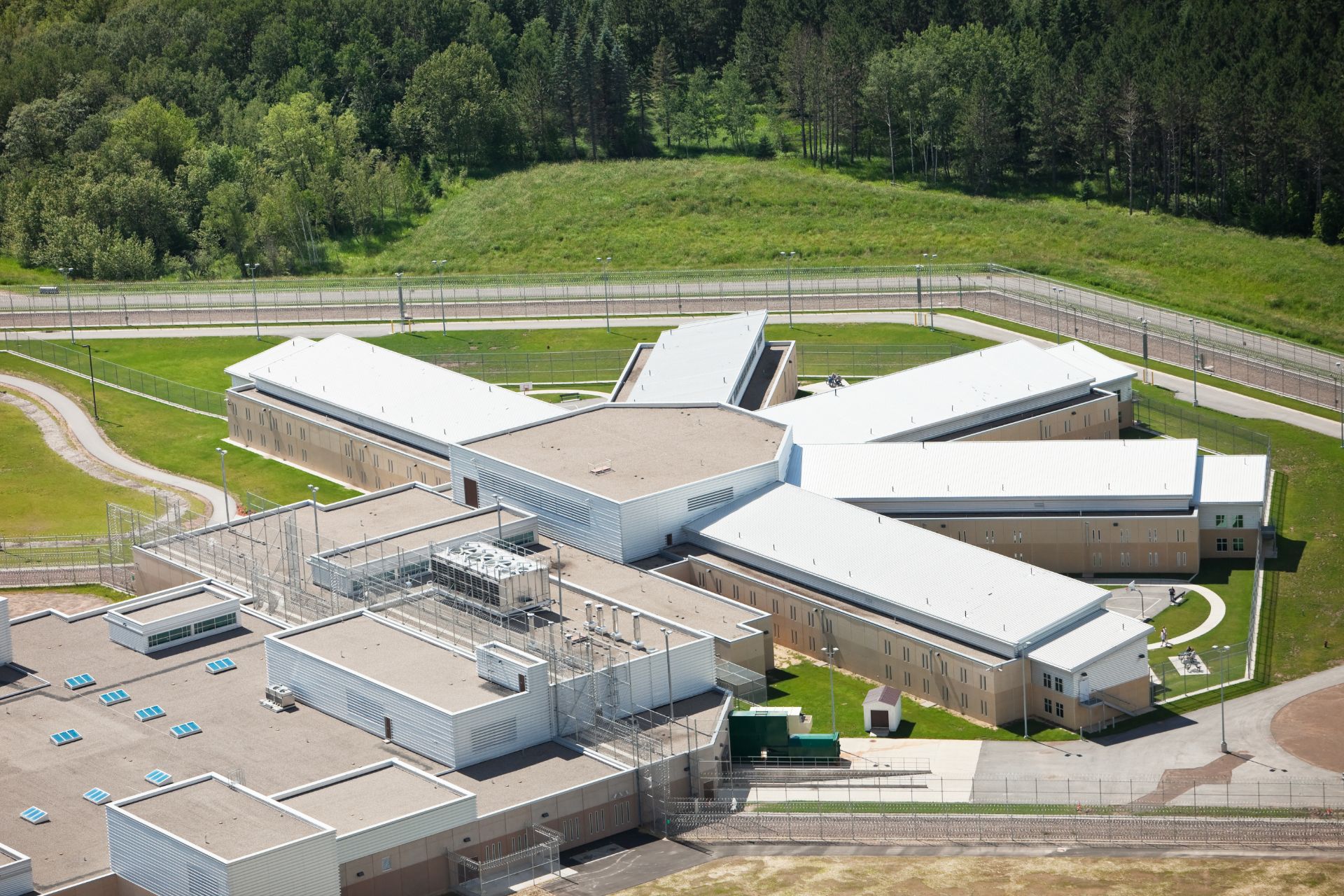
Aerial radar and video analytics pilot at a prison
A two-week proof of value combining 3D radar, AI video confirmation and the operator’s existing VMS.
Full case studies are shared with approved organizations through the TKG Library. Already approved? Open the library
Customer
Corrections operator
Site
Operating prison
Solution
3D radar for airspace coverage; AI video analytics; PTZ cameras for visual verification; integration to the operator’s VMS
Timeline
Survey and design; three-day deployment and burn-in; two-week evaluation
TKG role
Design, oversight, project management, materials, analytics server and VMS integration
Prove it on a live facility first.
The facility faced drone deliveries of contraband, as well as ground throw-overs. Cell searches, drug tests and perimeter patrols were reactive and labor-intensive.
It needed to know whether radar and analytics could reliably detect and track drones over a live facility before committing to permanent systems.
The solution
- 3D radars mounted centrally to cover the airspace over the facility
- AI video analytics and PTZ cameras that slewed to radar tracks for visual verification and fewer false positives
- A temporary installation, deployed in three days and burned in over two days
- Integration with the operator’s VMS so the security team saw tracks and video in its existing tools
- Test flights with DJI Mavic 3, Phantom and Matrice-class drones flown by the operator’s pilots
- Success criteria agreed up front: every target in the field of view tracked, and detection before the drone reached the perimeter. Mitigation was out of scope.
What was delivered.
Deployment
Installed, burned in and operating on schedule
Evaluation
Two-week evaluation against success criteria agreed up front
Integration
Radar tracks and verification video available in the operator’s existing VMS
Keys to a successful implementation.
Agree success criteria before day one
Write down what counts as a detection, at what distance, day and night.
Fly your own drones during burn-in
Your pilots, on real approaches, so operators learn the system on the facility they protect.
Decide who answers an alert
On each shift: confirm on camera, mark the drop point, send a recovery team, call police.
Integrate with the VMS you already use
Officers should not have to watch another screen.
Log every event from the start
The pilot record becomes the baseline for the permanent system and evidence for prosecutors.
Who did what.
TKG Security
Design, project management, materials, analytics server, VMS integration, tuning
Integration partner
Electrical and data installation support; site escort
Customer and site identities withheld. Results are site-specific.
Planning a similar system?
Send the site, the mission and what is already installed. A TKG engineer will respond.